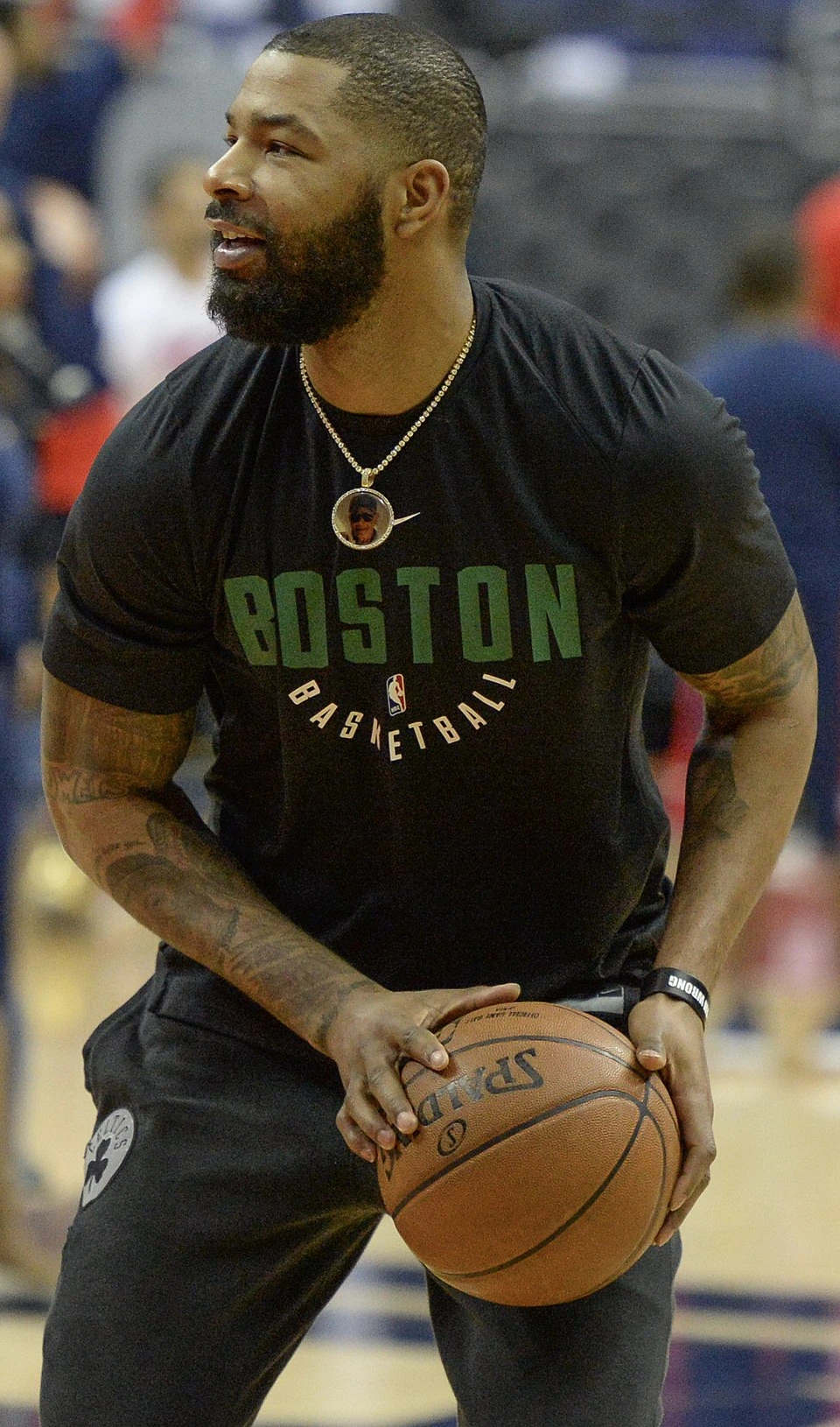
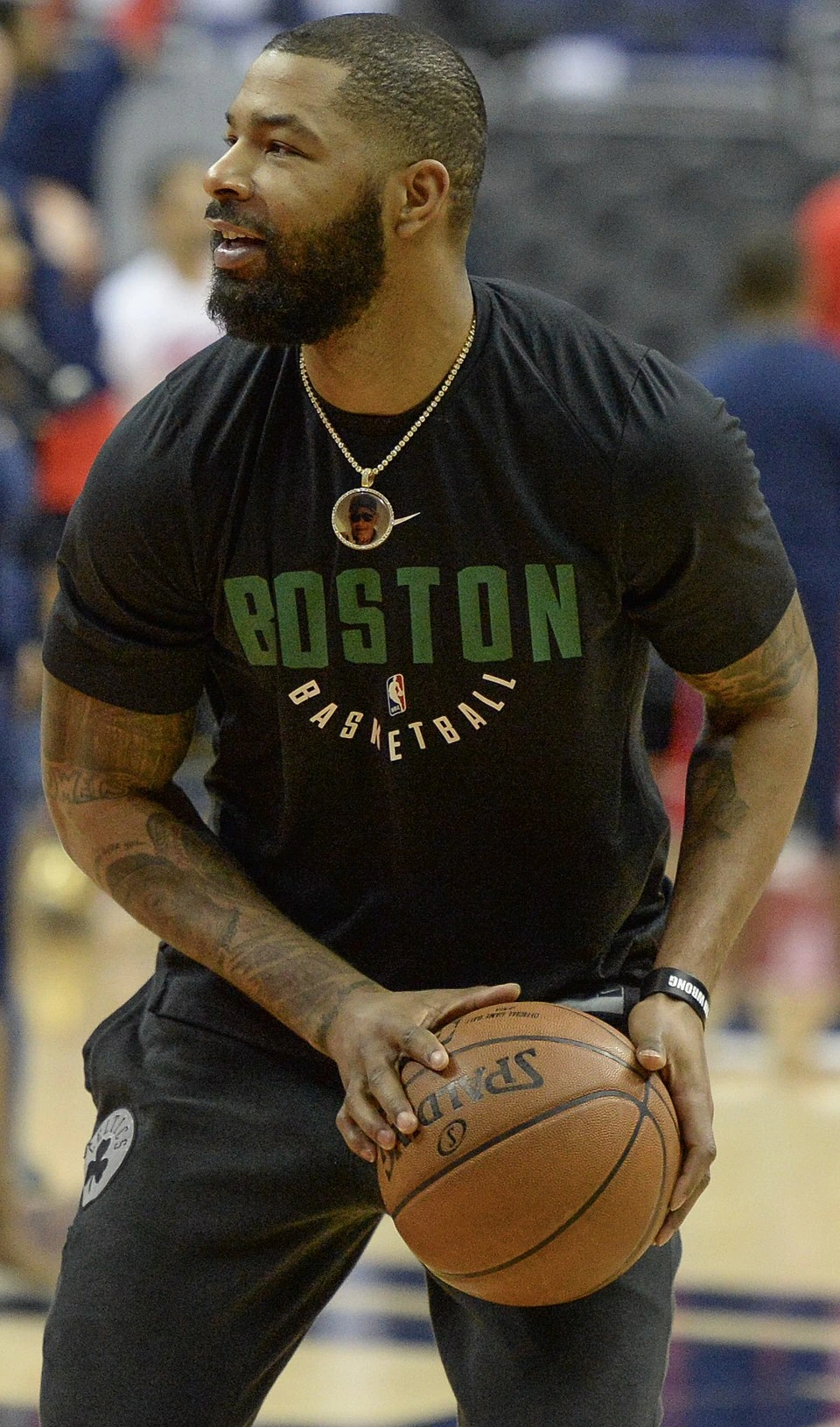
To confirm you have the right person: the NBA Marcus Morris is listed on Basketball-Reference under the player ID "morrima03," drafted in 2011, and has played for teams including the Houston Rockets, Detroit Pistons, Boston Celtics, New York Knicks, Los Angeles Clippers, and most recently the Cleveland Cavaliers. His full legal name is Marcus Thomas Morris Sr. You may also see him credited as Marcus Morris Sr. in contract databases like Spotrac and HoopsHype, which is the clearest way to distinguish him from other Marcus Morris entries.
His estimated net worth right now

As of March 27, 2026, Marcus Morris Sr. If you are specifically searching “Marcus Smith NASCAR net worth,” note that this article is about Marcus Morris Sr. , not a NASCAR driver. 's estimated net worth falls in the range of $20 million to $30 million.
That range is an informed estimate, not a verified disclosure, because NBA players do not file public financial statements. The figure is grounded in his publicly documented career earnings, which Basketball-Reference puts at a minimum of $108,027,184 in NBA salary alone over his career.
After accounting for taxes (federal, state, and city taxes on NBA salaries are steep), agent fees (typically 3 to 4 percent), living expenses, and the natural reduction that comes between gross career earnings and actual retained wealth, a $20 million to $30 million net worth range is consistent with what financial analysts typically attribute to players with similar career earnings trajectories.
Sites like Celebrity Net Worth have published figures in this general territory, though those are themselves estimates rather than confirmed balance sheets.
This estimate was last reviewed and updated for this article on March 27, 2026. Given that Morris signed a one-year, $3,303,771 contract in September 2024 and followed that with a 10-day contract with the Cleveland Cavaliers, his active playing status (albeit at reduced salary levels compared to his peak) continues to add modestly to his wealth base. Forbes reports that Marcus Morris Sr. agreed to a 10-day contract with the Cleveland Cavaliers in March 2024 followed that with a 10-day contract with the Cleveland Cavaliers. Any significant change, such as a new multi-year deal, a major business exit, or a legal judgment related to the widely reported fraud case allegations, could shift this range noticeably.
NBA contracts: the engine behind the money
Morris's wealth story is almost entirely a basketball salary story, at least on the income side. His career earnings crossing $108 million puts him in a tier of NBA veterans who were never supermax earners but sustained long, productive careers at solid mid-tier and, for a period, upper-mid-tier salaries. The progression tells the story clearly.
| Season / Contract Period | Team | Approximate Annual Salary |
|---|
| 2018/19 | Boston Celtics | $5,375,000 |
| 2019/20 (Knicks/Clippers) | New York Knicks / LA Clippers | Approx. $15M range (multi-year deal) |
| 2022/23 | Los Angeles Clippers | $16,372,093 |
| 2024/25 | Free agent signing | $3,303,771 (1-year contract, signed Sept. 2024) |
The 2019 contract with the Clippers was arguably the defining financial moment of his career. After a strong season in Boston, he leveraged his market value into a deal that pushed his annual salary well into the eight-figure range. By 2022/23, he was earning $16,372,093 with the Clippers, which HoopsHype's salary database confirms. That peak salary period is where the bulk of his wealth accumulation likely occurred, assuming reasonable spending discipline and investment activity. The 2024 signing for just over $3.3 million reflects a late-career veteran minimum-adjacent deal, common for players maintaining roster spots while their primary earning years wind down.
Endorsements, the AND-1 deal, and other income

Marcus and Markieff Morris signed a three-year endorsement deal with AND-1, the basketball footwear and apparel brand, according to reporting from iSportConnect. SGB Media Online also reports that AND-1 signed the Morris twins, Marcus and Markieff Morris, to a three-year endorsement contract AND-1 signed the Morris twins to a three-year endorsement contract. This is the most clearly documented sponsorship arrangement tied to Marcus Morris Sr.
AND-1 has historically focused its marketing around streetball culture and has a niche but loyal basketball audience, which aligns well with the Morris twins' Philadelphia roots and playing style identity. The financial terms of the deal were not publicly disclosed, but multi-year endorsement contracts at this level for NBA veterans without superstar status typically range from low six figures to mid six figures annually, depending on the brand's budget and the scope of activation required.
Beyond AND-1, Marcus and Markieff run the Family Over Everything (FOE) Foundation and have relaunched the FOE basketball camp in Philadelphia, according to reporting from the Philadelphia Inquirer. Camp and foundation work at this scale is generally not a significant income generator for the athletes involved, and in many cases operates at a break-even or slight loss when personal contributions are factored in. It is better understood as a community investment and brand-building activity rather than a wealth driver. Still, the visibility it creates can support ancillary endorsement conversations.
There is no verified public record of Morris holding major equity stakes in tech companies, restaurant chains, or real estate portfolios the way some higher-profile NBA veterans have. That does not mean those investments do not exist, only that they have not been publicly documented in a way that allows responsible reporting here. Any claims from non-authoritative blogs assigning specific investment values to him should be treated with skepticism unless sourced to a primary disclosure.
What we know about his assets, lifestyle, and liabilities
On the asset side, the most defensible statement is that Marcus Morris Sr. has had more than a decade of NBA income to convert into durable wealth. NBA players at his earning level typically hold a combination of real estate, investment accounts, and cash or equivalents. Philadelphia roots and Los Angeles ties from his Clippers years suggest he likely has real estate interests in at least one of those markets, but no specific property transactions have been publicly confirmed at the time of this writing.
On the liability side, the most significant public development is the fraud case that emerged involving allegations of stealing approximately $265,000 from Las Vegas casinos. This was widely reported, including by Celebrity Net Worth. Legal proceedings carry potential financial consequences, including restitution, legal fees, and civil exposure, and depending on how that case resolves, it could represent a material liability against his net worth. This is an active variable that readers should monitor for updates, because it is the kind of event that can shift a net worth range meaningfully in either direction.
On lifestyle costs: NBA veterans at Morris's career earnings level typically carry significant ongoing expenses, including multiple properties, family support, security, and travel. These are not unusual, but they explain why gross career earnings of over $108 million do not translate into $108 million in retained net worth. The math between career earnings and current net worth almost always involves substantial tax and expense reduction, which is why the estimated range of $20 to $30 million is realistic rather than pessimistic.
How his net worth has built up over his career

Morris entered the league in 2011 as a first-round pick and spent his early years on modest rookie-scale contracts while moving between the Rockets, Suns, and Pistons. During this phase, his net worth was likely in the low single-digit millions, typical for a young player building a roster role. The Boston year in 2018/19, where he earned $5,375,000, marked the start of his escalation into meaningful wealth accumulation. That season also raised his market profile significantly, leading directly to the larger Clippers-era contracts.
The 2019 to 2023 window at the Clippers, where his salary peaked around $16 million annually, is the core wealth-building period. An NBA player earning in that range and managing expenses conservatively can realistically accumulate $5 to $8 million in net worth per year during peak earning seasons, after taxes and living costs. Even at more modest savings rates, four to five years at that salary level provides the foundation for the $20 to $30 million estimate. Post-2023, his income has declined to veteran minimum territory, which means he is likely in a wealth preservation phase rather than a significant accumulation phase.
It is worth noting that comparable NBA veterans with similar career trajectories, like Marcus Smart, who also built wealth through sustained mid-tier contracts and endorsements rather than supermax deals, tend to land in similar net worth ranges. The pattern is consistent: long career, solid but not elite contracts, modest endorsement income, and responsible (but not necessarily exceptional) financial management produces outcomes in the $15 million to $35 million range for most players in this bracket.
How to verify updates and read net worth estimates correctly
Net worth estimates for active or recently active NBA players are rarely exact. Here is how to read them responsibly and where to check for updates.
- Check salary databases first: HoopsHype and Spotrac publish year-by-year salary data for NBA players, and that information is generally reliable because it is sourced from publicly filed contracts. Basketball-Reference also aggregates career earnings. These give you the income side of the equation with high confidence.
- Understand that estimated net worth is not verified wealth: When you see a figure like "$20 million net worth," that number reflects an estimate based on known income minus reasonable assumptions about taxes and expenses. It is not a bank statement. No NBA player files a public financial disclosure.
- Monitor primary news sources for contract updates: NBA.com and official team press releases are the authoritative sources for new signings. Morris's 10-day Cavaliers deal is a good example, it was confirmed via NBA.com, which is where you want to verify any new contract.
- Watch for legal and personal finance developments: Court records and business filings (when public) are the most reliable windows into liabilities. For Morris, the ongoing fraud case is a material variable. Court databases in Nevada or California are where that information would surface publicly.
- Treat celebrity net worth aggregator sites as starting points, not endpoints: Sites that publish celebrity wealth estimates are useful for getting a general range quickly, but they rarely disclose their methodology and are not updated in real time. Use them to establish a ballpark, then cross-reference with salary data.
- Endorsement income is almost never disclosed: Unless a brand or athlete specifically announces deal terms, endorsement values are estimates. The AND-1 deal with the Morris twins is confirmed as existing; the dollar value is not public.
The practical takeaway is this: Marcus Morris Sr.'s estimated net worth of $20 million to $30 million as of March 2026 is a well-grounded range built on over $108 million in documented career earnings, adjusted for the real costs of an NBA career. His wealth is primarily salary-derived, with modest endorsement contribution and no publicly confirmed major alternative income streams. The legal situation is the biggest variable to watch. For ongoing updates, bookmark his player pages on HoopsHype and Basketball-Reference, and set a news alert for his full legal name, Marcus Thomas Morris Sr., to catch any contract signings or legal developments as they happen.